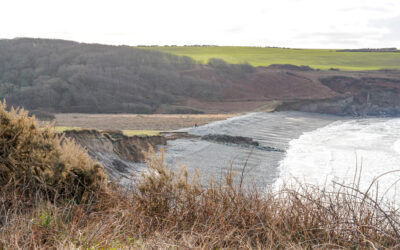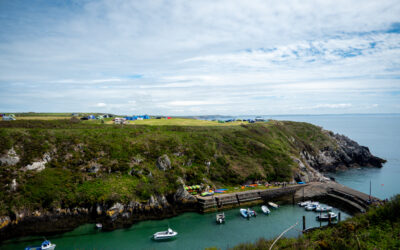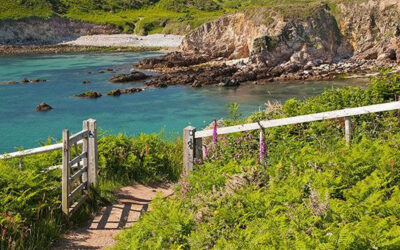
Ramsey Island lies just off the coast of the St Davids headland in view of Whitesands beach. It’s surrounded by a network of smaller islands and islets. These including Bancyn-ffald Carreg-trai and the Bishops and Clerks group.
The island is an RSPB bird reserve with the perfect habitat for breeding Choughs. Peregrine Falcons are also numerous on Ramsey with its 300 ft plus sea cliffs. Other breeding species include Ravens, Buzzards, Gulls, Razor Bills, Manx Shearwaters and Guillemots.
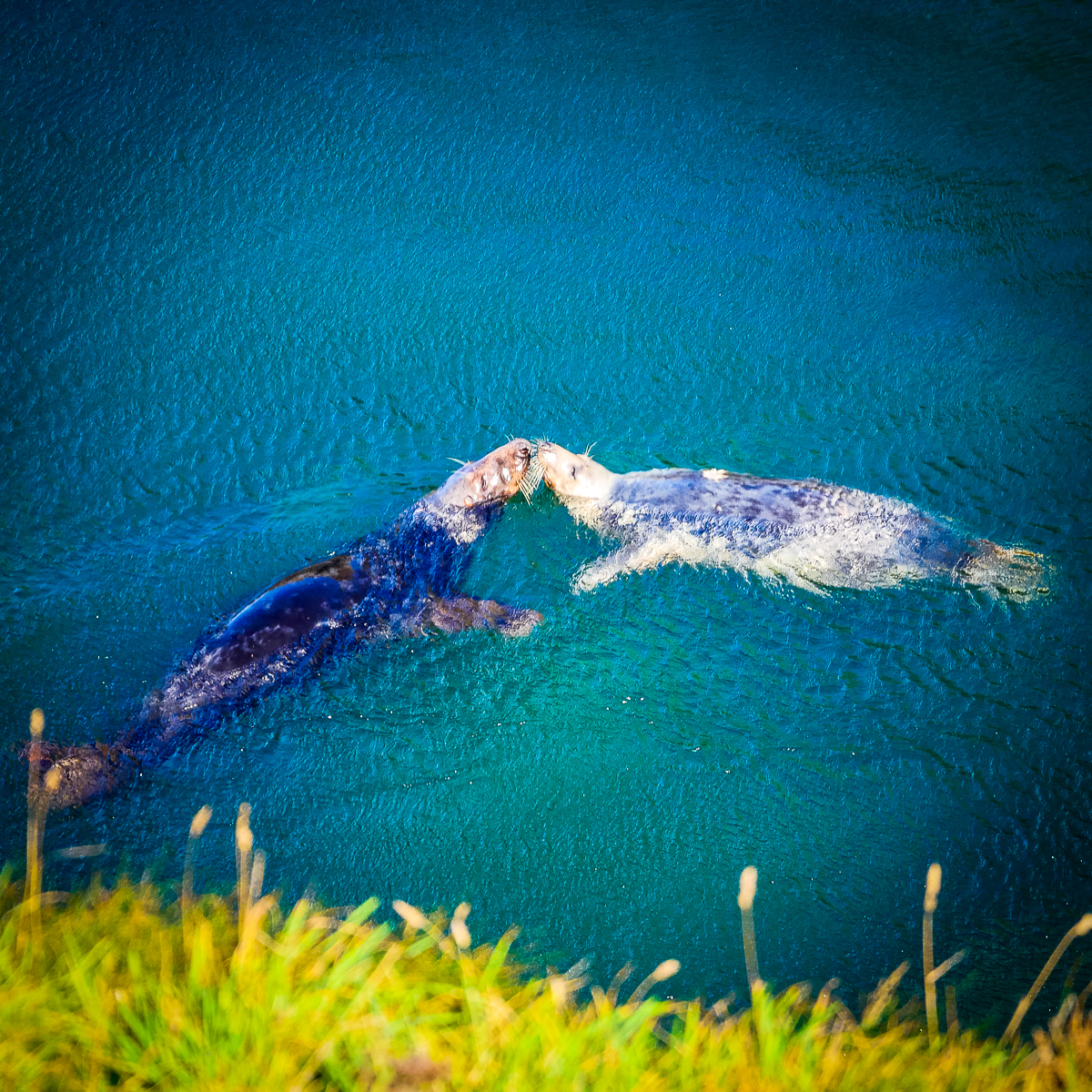
In addition to the birds that breed on the island it supports a breeding colony of Grey Seals with up to 400 seal pups born each year. Ramsey is also home to a flock of grazing sheep which help to naturally manage the length of the grass making the island more attractive to the protected breeding Choughs.

Ramsey Island History
The island was church owned from 1082 AD up until the start of the last century. It was then sold into private ownership and farmed until the 1990’s. The RSPB then bought it to safeguard it because of its importance as a sea bird colony.
Ramsey is just under 2 miles long and has an area of 640 acres. Much like Skomer to the south it has archaeological evidence of human settlements dating as far back as 5000 years.
Archaeologists have identified cairns (stone burial monuments), barrows (burial mounds), and field systems, indicating that early inhabitants were farming and burying their dead on the island.
One of the most significant discoveries is a possible Bronze Age promontory fort located on a rocky headland. This site includes defensive features such as a ditch separating it from the rest of the island. This suggests it may have been a permanent settlement or protected community space.
There are number of boat operators who take tours around the island. Thousand Islands Expeditions run the ferry service to and from the island from spring to autumn each year. The service leaves from the St Davids Lifeboat Station and tickets can be bought online or in St Davids.

The Bitches
Ramsey Sound
Ramsey Island (Ynys Dewi)
Near St David’s
Aerial
Pembrokeshire
South
Towns & Villages