
The Atlantic puffin (Fratercula arctica) is one of the most recognisable seabirds in the North Atlantic, famous for its colourful bill and penguin-like stance. Often called the “clown of the sea” puffins are well adapted to life sea and only come ashore to breed.
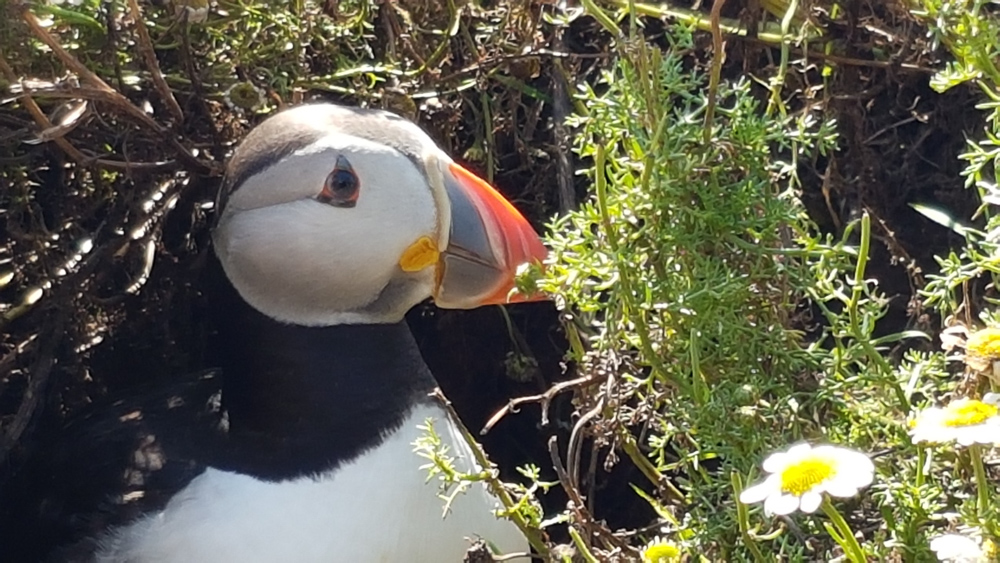
Pembrokeshire Puffin
Adult Atlantic puffins typically stand about 25–30 cm tall. They are compact stocky birds, weighing between 300 and 500 grams depending on the season and food availability. Their wingspan is around 50cm. Despite their small size, puffins are powerful fliers, beating their wings up to 400 times per minute to stay airborne.
Puffins can live for up to around 20 years, with some individuals recorded reaching their late twenties. They don’t breed until they are around 4–6 years old, and most pairs return to the same nesting burrow and partner each year.
The puffin’s most striking features is its bright, triangular bill. During the breeding season, the bill becomes vividly coloured in orange, yellow, and blue to attract mates. In winter, the outer layers are shed, leaving a smaller, duller bill.
Puffins are exceptional divers. Using their wings to “fly” underwater, they can dive to depths of up to 60 metres in search of fish. Their diet mainly consists of sand eels, herring, and sprats. A specialised hinge in their beak allows them to hold multiple fish crosswise while continuing to catch more. Puffins are classically pictured with a mouth full of sand eels.
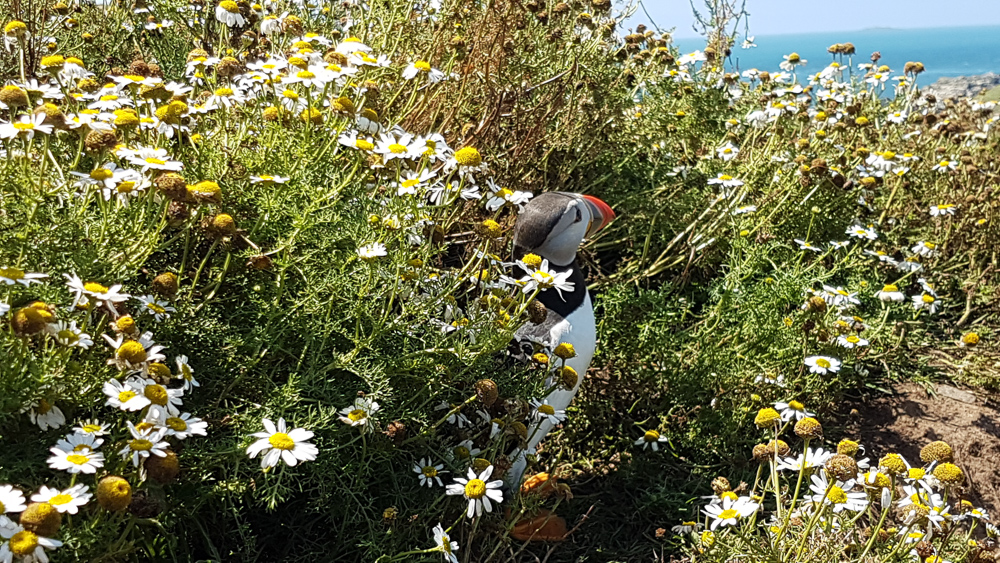
Puffin in the undergrowth on Skomer Island
In Pembrokeshire these seabirds nest in burrows primarily on Skomer Island, where they lay a single egg each year. Both parents share incubation duties and feeding of the chick, known as a puffling. Managed by the Wildlife Trust of South and West Wales, the island hosts one of the largest puffin colonies in southern Britain. Each year, typically from April to July, thousands of puffins return to Skomer to breed.

Arriving at Skomer Island
Visitors can reach Skomer by boat from Martin’s Haven, and the short crossing offers views of seals, porpoises, and other seabirds. For those unable to land on the island, nearby coastal paths and boat tours provide excellent viewing opportunities.
Why not stay a Galwad y Mor when planning a visit to see the Puffins of Pembrokeshire